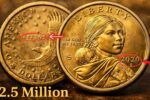
The Sacagawea dollar coin, first introduced in 2000, is one of the most distinctive modern coins in American history. Featuring Sacagawea, the Shoshone woman who guided Lewis and Clark, the coin was designed to honor her contributions to exploration and American heritage. While most Sacagawea dollars are common and circulate at face value, certain rare varieties and error coins have become highly collectible. Some examples are worth hundreds or even thousands of dollars, making them exciting finds for collectors and casual enthusiasts alike. This guide explores the unbelievable value of Sacagawea dollars in today’s market and how to identify the rare issues.
The Origins of the Sacagawea Dollar
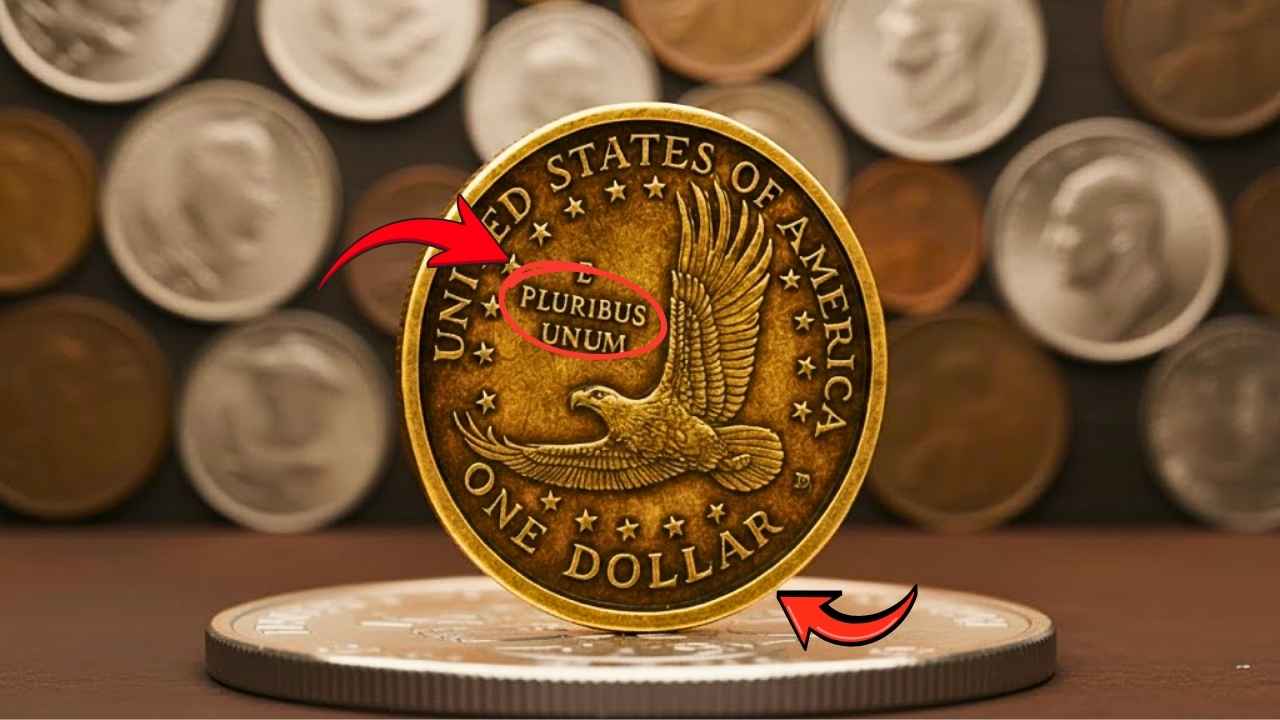
The coin was created to replace the Susan B. Anthony dollar, which had failed to gain popularity. The Sacagawea dollar was designed with a golden hue, achieved through a manganese brass outer layer, and a smooth edge to distinguish it from the quarter. Glenna Goodacre designed the obverse, showing Sacagawea carrying her infant son, while Thomas D. Rogers created the reverse with a soaring eagle. Despite its beauty, the coin struggled to gain widespread use in everyday transactions, but it quickly became a favorite among collectors.
The Cheerios Dollar
One of the most famous varieties is the 2000‑P Cheerios dollar. As part of a promotional campaign, General Mills included Sacagawea dollars in Cheerios cereal boxes. These coins featured a prototype reverse design with enhanced tail feathers on the eagle. Only a few thousand were distributed, making them extremely rare. Today, Cheerios dollars can be worth several thousand dollars depending on condition.
The Goodacre Presentation Dollars
Glenna Goodacre, the coin’s designer, was paid her commission in 5,000 specially struck Sacagawea dollars. These coins were produced with a unique finish and are known as Goodacre presentation dollars. They are highly collectible and often sell for hundreds of dollars each, with pristine examples commanding even higher prices.
The Wounded Eagle Variety
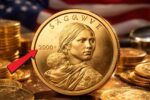
The 2000‑P Wounded Eagle variety is an error coin showing a die gouge across the eagle’s body on the reverse. This mistake created a distinctive appearance that collectors prize. Depending on condition, these coins can be worth hundreds of dollars, making them one of the most sought‑after error varieties in the series.
The Native American $1 Coin Program
In 2009, the Sacagawea dollar was renamed the Native American $1 Coin, with annually changing reverse designs celebrating Native American contributions. Themes have included agriculture, trade, and military service. While most of these coins are common, proof and uncirculated issues are collectible, especially in high grades. The rotating designs add variety and historical depth to the series, making them appealing to collectors.
Error Coins and Rare Varieties
Error coins are among the most fascinating Sacagawea dollars. Mistakes during the minting process created unique varieties that collectors eagerly seek. Examples include off‑center strikes, doubled dies, and coins struck on wrong planchets. These errors make the coins rare and unique, often commanding prices in the hundreds or thousands depending on condition and rarity.
Factors That Influence Value
The value of Sacagawea dollars depends on several factors. Rarity is the most important, with limited‑issue varieties and error coins commanding the highest prices. Condition also plays a crucial role, as coins in mint state or proof condition are worth far more than those with wear. Historical significance and collector demand further influence value. Professional grading services provide certification, ensuring authenticity and accurate valuation.
How to Identify Rare Sacagawea Dollars
Identifying rare Sacagawea dollars requires careful attention to detail. Collectors should look for mint marks, which indicate where the coin was produced. Special varieties such as the Cheerios dollar or Goodacre presentation coins have distinctive features that set them apart. Errors such as doubled dies or unusual markings can significantly increase a coin’s value. Using a magnifying glass and consulting reputable coin guides can help determine whether a dollar is rare. Professional grading services also provide certification, ensuring authenticity and accurate valuation.
Collecting Sacagawea Dollars as a Hobby
Sacagawea dollars offer a wide range of designs and varieties to discover. From early issues like the Cheerios dollar to modern Native American program coins, the series provides endless opportunities for collectors. Many enthusiasts start by assembling complete year sets before moving on to rarities and errors. The thrill of finding a valuable coin in circulation or acquiring one at auction adds excitement to the hobby.
Investment Potential
Rare Sacagawea dollars are not only collectibles but also investment opportunities. Their rarity and demand make them tangible assets that can appreciate over time. Investors view these coins as a way to diversify portfolios while enjoying the artistry and history they represent. However, like any investment, coin collecting requires knowledge and careful research to avoid pitfalls. Consulting professional grading services and reputable dealers is essential for ensuring authenticity and value.
Key Highlights
- Sacagawea dollars were first issued in 2000 with a golden appearance
- Rare varieties include the Cheerios dollar, Goodacre presentation coins, and the Wounded Eagle error
- The Native American $1 Coin Program introduced annually changing reverse designs beginning in 2009
- Error coins such as off‑center strikes and doubled dies can be worth hundreds or thousands
- Value depends on rarity, condition, and collector demand
- Collecting Sacagawea dollars offers both historical appreciation and investment potential
Final Words
The Sacagawea dollar is more than just a coin—it is a tribute to Native American history and a symbol of American artistry. While most examples are common, rare varieties and errors can transform an ordinary dollar into a treasure worth thousands. The unbelievable value of Sacagawea dollars in today’s market reminds us that extraordinary worth can be found in unexpected places. For collectors and enthusiasts, the pursuit of these coins is both a passion and a journey into America’s past. Whether discovered in circulation, inherited from family, or acquired through auctions, rare Sacagawea dollars continue to inspire and excite collectors around the world.