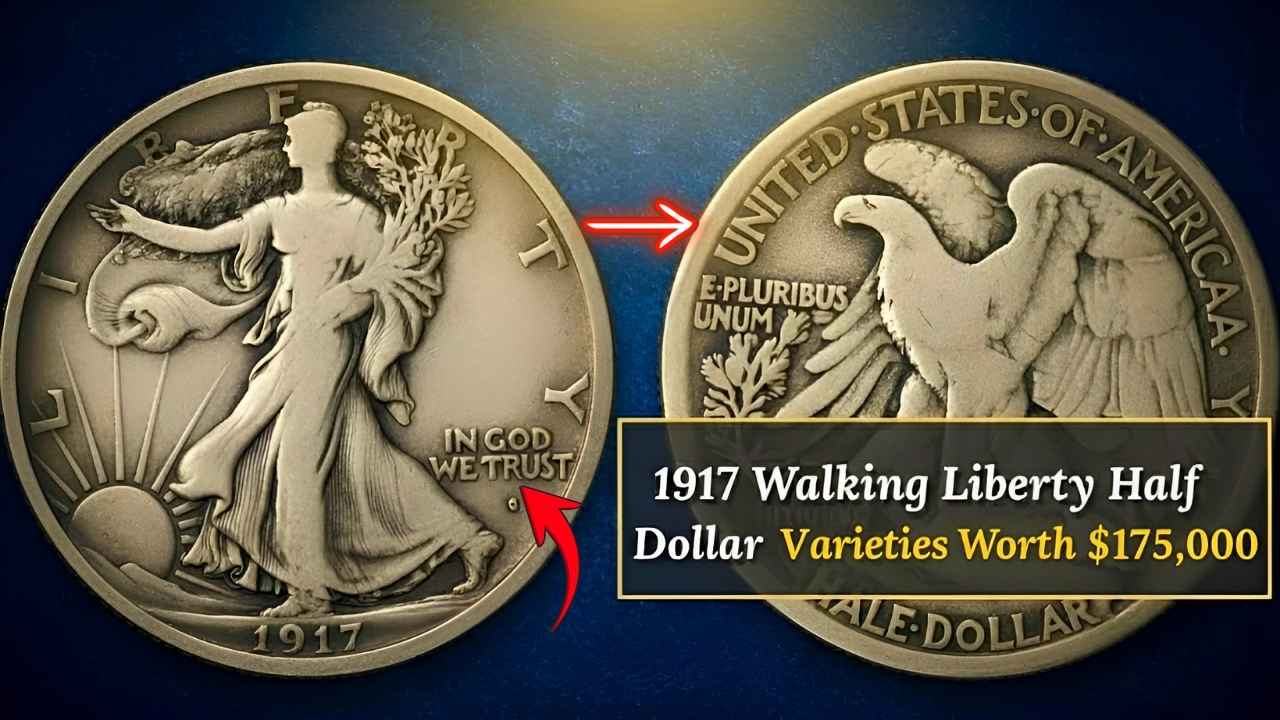
The Walking Liberty half dollar is one of the most admired coins in American numismatics. Struck between 1916 and 1947, it is celebrated for its artistic design and historical significance. Among the early issues, the 1917 Walking Liberty half dollar stands out as a coin that collectors treasure. Depending on its mint mark, condition, and rarity, this coin can be worth far more than its face value. Some examples have sold for thousands, making the 1917 issue a hidden gem for coin enthusiasts. This guide explores the history, varieties, and value of the 1917 Walking Liberty half dollar.
The Design of the Walking Liberty Half Dollar
The coin was designed by Adolph A. Weinman, a sculptor whose artistry brought new life to American coinage. The obverse features Lady Liberty striding confidently toward the dawn of a new day, draped in the American flag and carrying branches of laurel and oak. The reverse depicts a majestic bald eagle perched on a mountain crag, symbolizing strength and freedom. This design was so admired that it later inspired the American Silver Eagle bullion coin introduced in 1986.
Historical Context of 1917
The year 1917 was a pivotal time in American history. The United States had just entered World War I, and the nation was experiencing both economic and social change. Coins minted during this era carry the weight of history, representing a period of transformation and resilience. The Walking Liberty half dollar embodies these themes, making the 1917 issue especially meaningful to collectors.
Mint Marks and Varieties
The 1917 Walking Liberty half dollar was struck at three different mints: Philadelphia (no mint mark), Denver (D), and San Francisco (S). The placement of the mint mark is significant. Early in 1917, mint marks were placed on the obverse below “In God We Trust.” Later that year, they were moved to the reverse near the eagle. As a result, collectors distinguish between obverse mint mark and reverse mint mark varieties. These differences make the 1917 issue particularly interesting and add to its collectible appeal.
Rarity and Value
The value of a 1917 Walking Liberty half dollar depends on its mint mark, variety, and condition. Coins struck at Denver and San Francisco with obverse mint marks are scarcer than those with reverse mint marks. Philadelphia issues are more common but still collectible. In circulated condition, these coins may be worth between $20 and $100. However, in mint state condition, values rise dramatically. High‑grade examples with sharp details and original luster can sell for hundreds or even thousands. Rare varieties, such as the 1917‑D obverse mint mark, are especially prized.
Factors That Influence Value
Several factors determine the value of a 1917 Walking Liberty half dollar. Rarity is the most important, with low‑mintage varieties commanding the highest prices. Condition plays a crucial role, as coins in mint state or proof‑like condition are worth far more than those with wear. Collector demand also influences value, with certain varieties being more sought after. Professional grading services provide certification, ensuring authenticity and accurate valuation.
How to Identify Rare Varieties
Identifying rare 1917 Walking Liberty half dollars requires careful attention to detail. Collectors should examine the placement of the mint mark, as obverse mint mark varieties are scarcer. Using magnification and consulting reputable coin guides can help determine whether a coin is rare. Professional grading services also provide certification, ensuring authenticity and accurate valuation. Serious collectors often rely on auction records and expert opinions to assess rarity and value.
Collecting Walking Liberty Half Dollars
The Walking Liberty half dollar series offers a wide range of designs and varieties to discover. From common circulation strikes to rare treasures like the 1917‑D obverse mint mark, the series provides endless opportunities for collectors. Many enthusiasts start by assembling complete year sets before moving on to rarities and errors. The thrill of finding a valuable coin in circulation or acquiring one at auction adds excitement to the hobby.

Investment Potential
Rare Walking Liberty half dollars are not only collectibles but also investment opportunities. Their rarity and demand make them tangible assets that can appreciate over time. Investors view these coins as a way to diversify portfolios while enjoying the artistry and history they represent. However, like any investment, coin collecting requires knowledge and careful research to avoid pitfalls. Consulting professional grading services and reputable dealers is essential for ensuring authenticity and value.
The Legacy of the 1917 Walking Liberty Half Dollar
The 1917 Walking Liberty half dollar remains a symbol of American history and artistry. Its design commemorates liberty and strength, while rare varieties remind us that extraordinary value can be found in unexpected places. Collectors cherish these coins not only for their monetary worth but also for the stories they represent. The legacy of the Walking Liberty half dollar continues to inspire and excite collectors around the world.
Key Highlights
- The Walking Liberty half dollar was designed by Adolph A. Weinman and struck from 1916 to 1947
- The 1917 issue was minted in Philadelphia, Denver, and San Francisco with both obverse and reverse mint mark varieties
- Rare varieties such as the 1917‑D obverse mint mark are highly prized
- Value depends on rarity, condition, and collector demand
- Mint state examples can be worth hundreds or even thousands
- Collecting Walking Liberty half dollars offers both historical appreciation and investment potential
Final Words
The 1917 Walking Liberty half dollar is more than just a coin—it is a piece of history and artistry. While most examples are common, rare varieties and mint state coins can transform an ordinary half dollar into a treasure worth thousands. For collectors and enthusiasts, the pursuit of these coins is both a passion and a journey into America’s past. Whether discovered in circulation, inherited from family, or acquired through auctions, rare Walking Liberty half dollars continue to inspire and excite collectors around the world.